














- Details
- Hits: 829
DOST-PTRI Builds Stronger Ties with AiDLab for AI and Textile Innovation
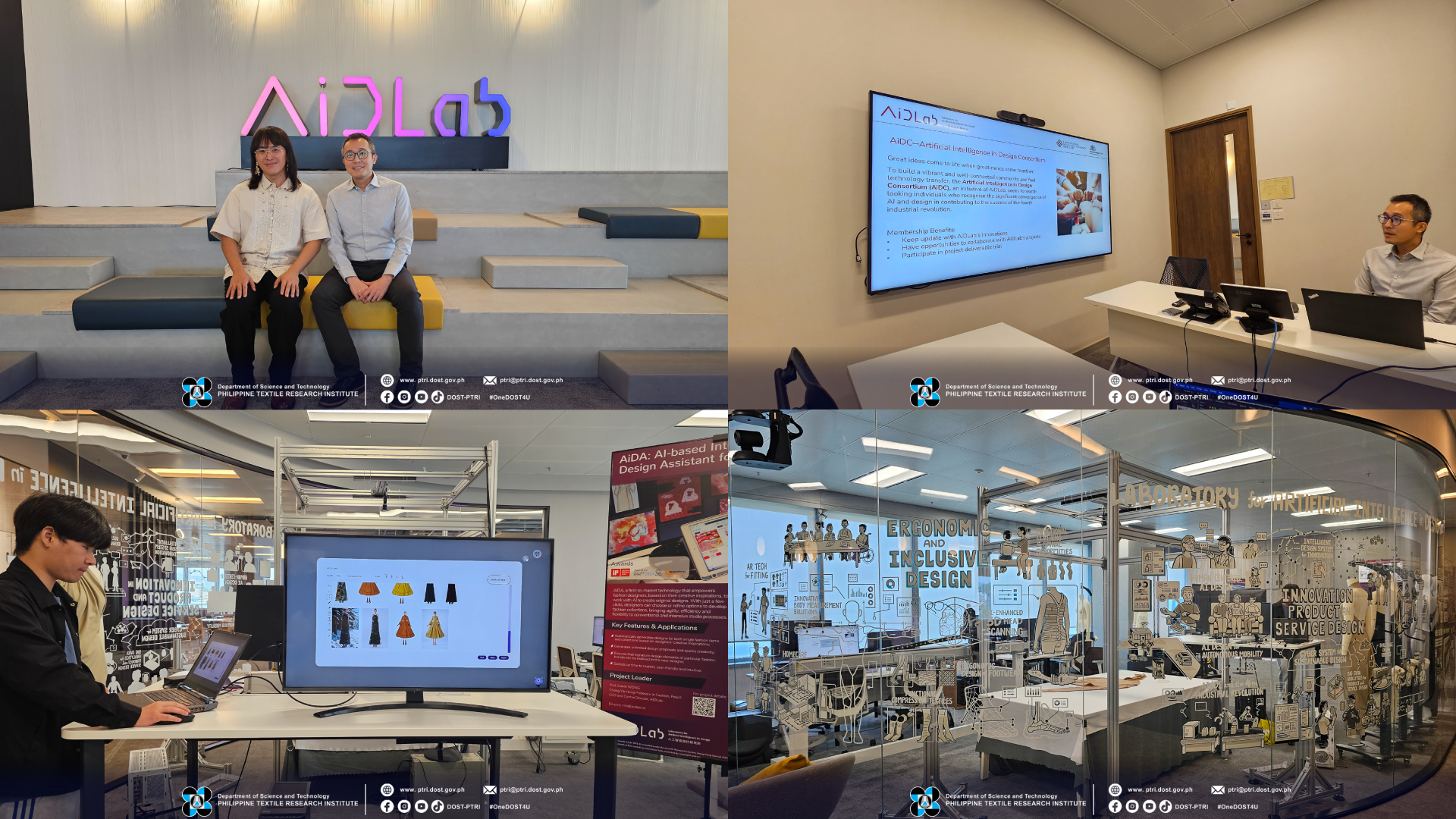
In a move to uplift textile innovation and design, the Department of Science and Technology–Philippine Textile Research Institute (DOST-PTRI) recently engaged with the Laboratory for Artificial Intelligence in Design (AiDLab) in Hong Kong to to strengthen partnerships and explore new opportunities in textile innovation and design.
- Details
- Hits: 732
DOST-PTRI and HKRITA Strengthen Ties for Sustainable Textile Innovations
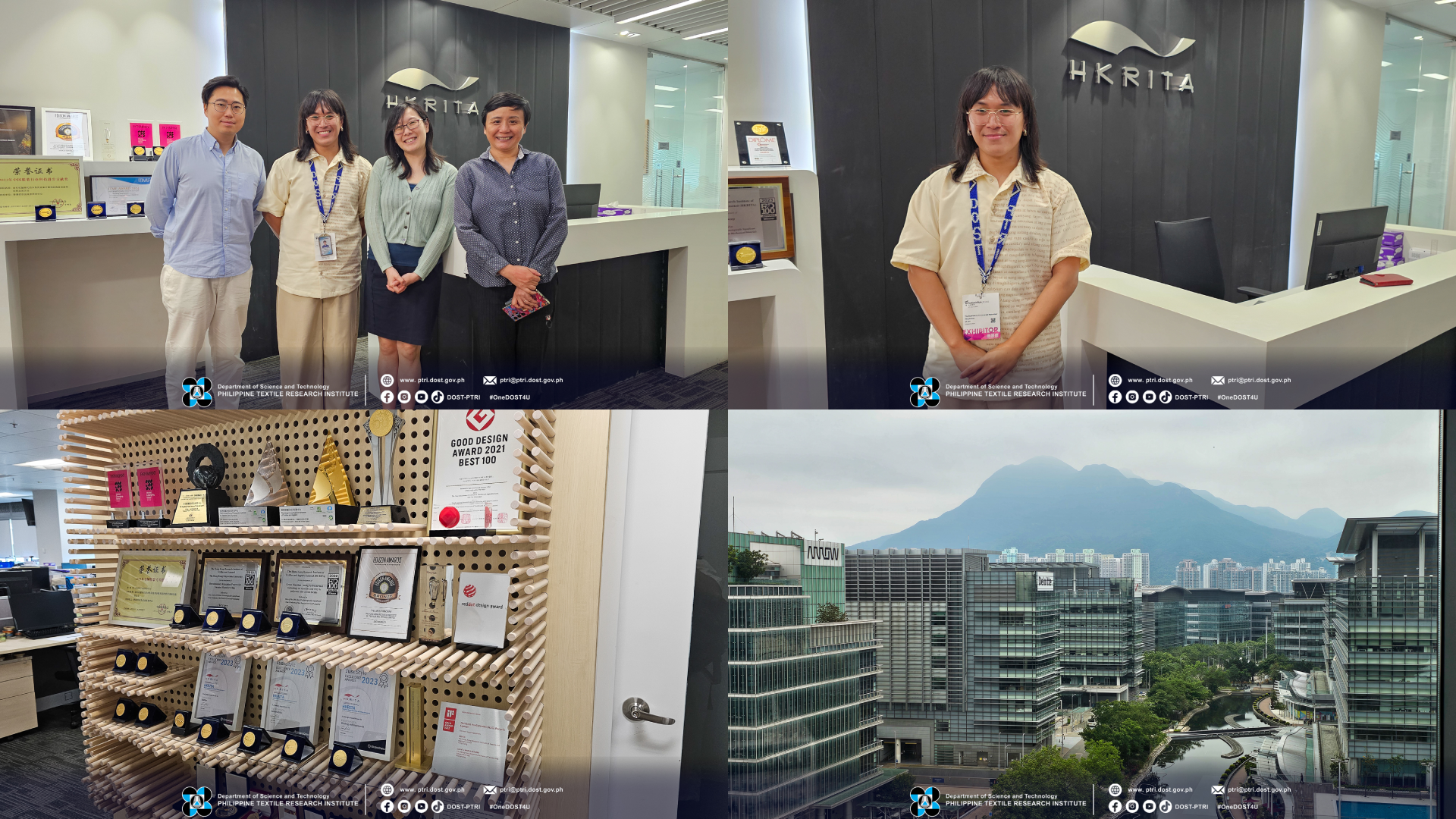
The Department of Science and Technology – Philippine Textile Research Institute (DOST-PTRI) is strengthening its partnership with the Hong Kong Research Institute of Textiles and Apparel (HKRITA).
- Details
- Hits: 729
DOST-PTRI and CHAT Explore Textile Collaboration in Hong Kong
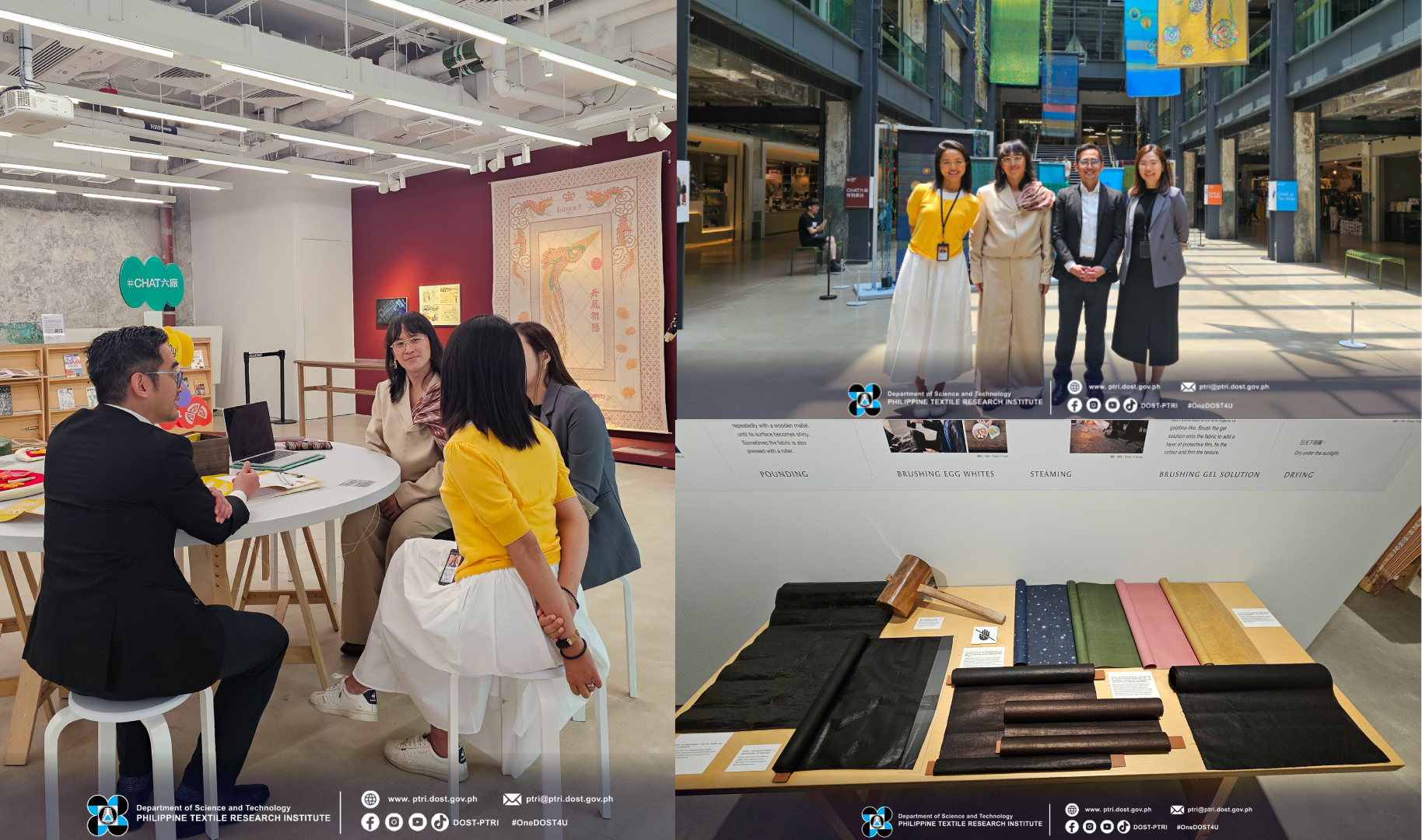
The Department of Science and Technology – Philippine Textile Research Institute (DOST-PTRI) recently met with key officials of the Centre for Heritage, Arts & Textile (CHAT) in Hong Kong to discuss opportunities for collaboration. The meeting was attended by the representatives of CHAT including Reimi Imaizumi, Head of Partnership and Development; Mak Tsz Kam, Manager of Partnership and Development; and Bruce Li, Associate Curator for Exhibitions and Collections (Heritage and Textiles). Representing the Philippine Trade and Investment Center (PTIC) in Hong Kong, Atty. Roberto B. Mabalot, Jr., Vice Consul (Commercial) and Commercial Attaché, joined the DOST-PTRI during the engagement.
- Details
- Hits: 946
DOST-PTRI Leads 7th Interagency Meeting to Strengthen Support for Philippine Handloom Weaving
The Department of Science and Technology – Philippine Textile Research Institute (DOST-PTRI) joined other key agencies at the 7th Philippine Handloom Weaving Interagency Meeting, held at the Intellectual Property Center, McKinley Hill Town Center, Fort Bonifacio, Taguig City.

- Details
- Hits: 705
Thank You for Making the NEXT @ Fashion InStyle a Success!
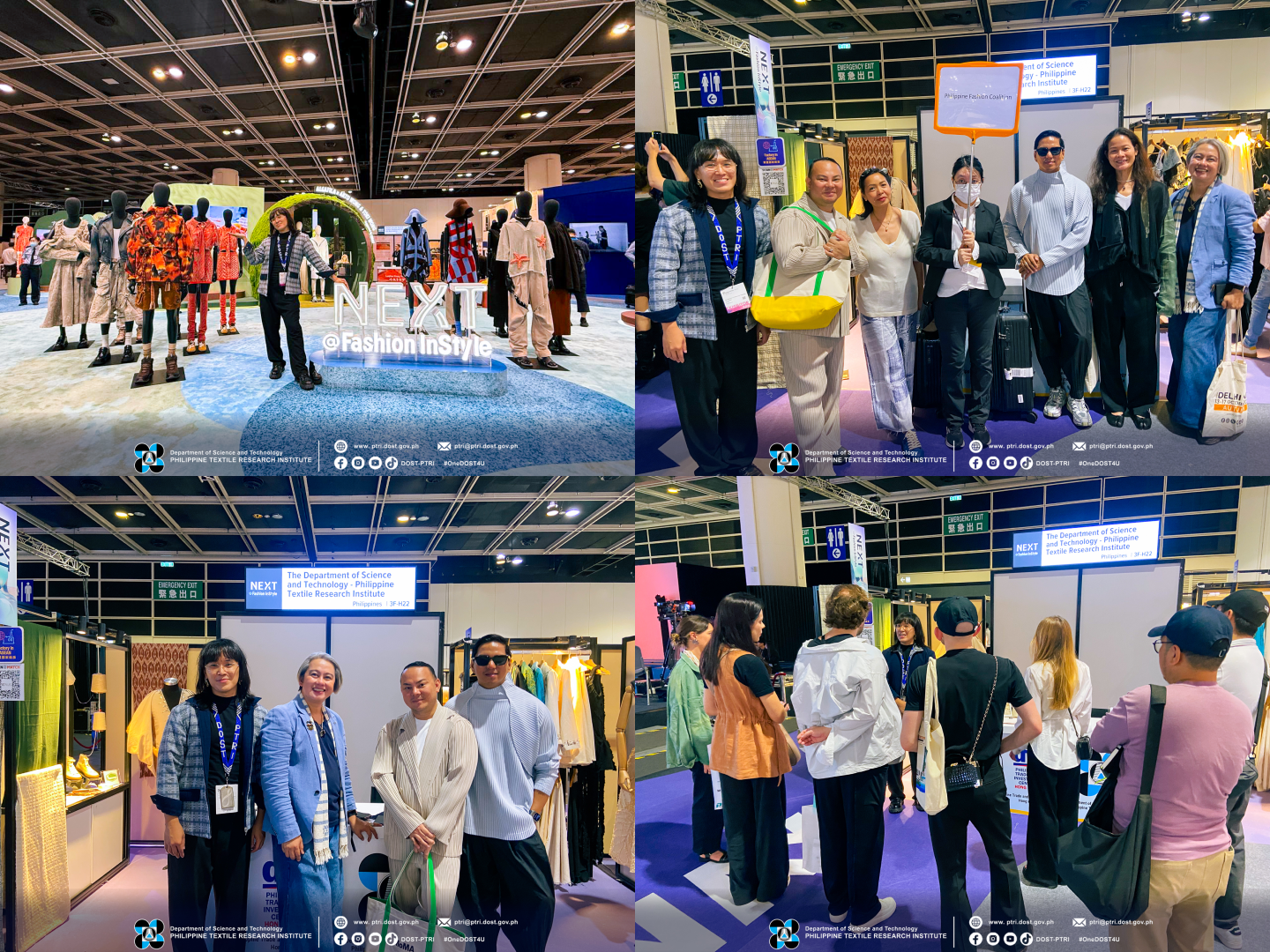
The Department of Science and Technology-Philippine Textile Research Institute (DOST-PTRI) would like to extend gratitude to everyone who joined us at NEXT @ Fashion InStyle. As the only Philippine booth at the event, DOST-PTRI carried the flag for the Philippines, proudly representing the country's growing strength in sustainable textile innovation ecosystem. To all the buyers, traders, investors, fashion designers, and textile stakeholders who took the time to connect with us, thank you for your support and for sharing this important moment with us.



PTRI PORTAL

Services Requests Registration Information System |

PROCurement Management Information System - Suppliers |

Philippine Textile Congress Portal |

Regional Yarn Production and Innovation Center |